Wednesday, September 20, 2017

Weeds Don’t Cry

Weeds don’t cry.
They stand stalwart 
in fields of corn,
in precise gardens of boxwood and lavender,
in chummy closeness with thyme and sage.
Then someone will shout:
“Pull up those damn weeds,”
and hands of all ages 
will strain against the  strength 
of those orphans of wildness and 
pull, pull, pull, 
or put foot to spade and
slice down to clear the root. 

In my salad days,
I pulled up sheaves of five foot tall
lamb's quarters to feed the breeder pigs. 
Lamb’s quarters, dandelion, amaranth, clover -
they grew between the crops and the rocks,
nourishing the pigs till the corn came in.

Someone once told me
that I was a weed - 
resilient, strong, able to flourish
in adverse conditions.
And I carried that thought 
throughout my life,
and felt proud ….
For when someone tells you that,
you never forget it. 

After years of garden work,
here’s how I feel about weeds:
I love them.
Kneeling in the middle
of  my tomato plants, 
I am contemplative and peaceful
as my reedy hands pull and pull and pull,
piling up the weeds of my past,
each a remembrance, 
an homage to enduring.


© Evie Safran, 2017

Men with picks and hoes clearing weeds in a field
Pullenvale, 1889
Photo held by John Oxley Library, State Library of Queensland
Photo from Wikimedia Commons

Wednesday, September 13, 2017

Gravity

The footway we walk sketches brown 
lines on green fields that seem to hover 
over the Irish Sea. All around us sheep 
and cows hold their mouths to grass, 
unmindful of heaven. This perpetual path 
traces cliffs, cuts into rock, curdles to mud, 
descends onto beaches of rock draped in 
laver fronds, home to codling and flounder. 
Kelp, clams, fishermen, children who 
splash and swim, all know the sea’s routine. 
Even Annie the cab driver knows the tidal 
ways: in out in out days nights unending. 
It’s the far away sun and the pale moon.

We are new to this isle, walk the age-old 
ring around it, study a chart of days in May 
till we know the minute sea rise hits 
its highest, sinks to its lowest on the shores 
of Moelfre, Cemaes, Red Wharf Bay, and 
Puffin Island where rats have captured the roost.
Under May’s full moon water surges 23 feet, 
then falls away, a film rewound to its start.  
When the shore goes dry, tide pools become
small seas. People throw sticks, dogs bound out 
on a shimmering beach. Boats sit askew with
nothing to do. We walk the expanse of sand, 
sink into rivulets still flowing back to the sea. 

It’s the far away sun and the pale moon,
silence of unseen forces,
unremitting.


© Marti Snell, 2017

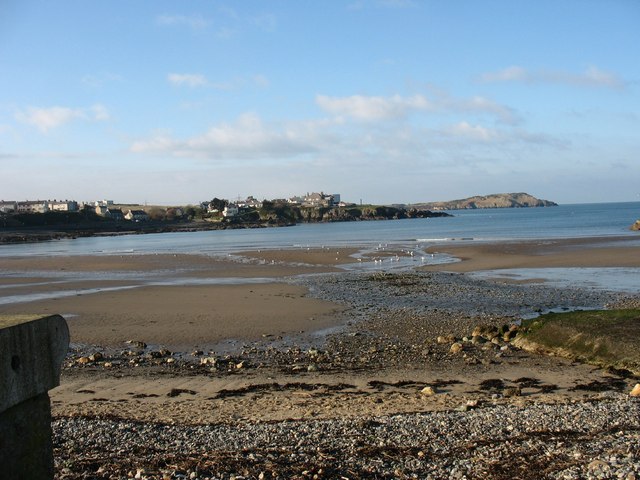
Traeth Mawr begins to emerge as the waters ebb
Photo by Eric Jones
from Wikimedia Commons

Tuesday, September 5, 2017

Conversation with a Hermit Thrush

A hermit thrush sang 
on the 12th of March,
off stage,
twenty-five feet into the woods.
An introductory note, 
softly drawn
and then,
dismissing gravity,
he tossed little bells 
in an upward cascade 
into the needles of the pine
where they dissolved.

Hey, Thrush, I heard that.
That’s your spring song. 
You sang too early.
Your part starts in April.
What are your fellow-choristers
to think?
You’ll notice 
that the pine warbler came in 
exactly on the proper beat –
the first of March.
From high in the pine grove,
his disciplined trill 
introduced the whole piece.
And following a few measures later
on the second of March - 
or was it the third -
the phoebe entered on cue, 
raspy, 
as though a miniature wire brush were lodged in his throat.

So, Thrush,
what do you think you’re doing?
You can’t just start singing
whenever you want.
Can’t you hear you’re out of sync?
You come in 
when your part blends with all the other singers -
when the red-eyed vireo’s lilting voice teases from the treetops,
when the rose-breasted grosbeak,
in full blossom, 
gargles with a throat of liquid sunshine. 
You enter
just a few measures before your cousin, the wood thrush, 
returns to its summer haunts. 
Your voice can hardly compete with the arpeggios and trills
that the summer thrush flings throughout the forest. 
That’s your cue to fly north.

Why then, Thrush, do you sing out of turn in early March?
Is it because you need to ripple, massage, stretch, empower
the cords that will give life to your music?
Does this send a shiver through your body 
that casts off the chill of winter,
and readies you for your moment six weeks hence? 
Does this affirm that you are a singer,
a splendid singer, a yearning singer,
and that you know your time is coming?

I can understand that.


  © Jennifer Gaden, 2017

Hermit Thrush
Photo by CheepShot
from Wikimedia Commons

Monday, August 28, 2017

Math for Girls Counts

Before they were great, great grandmothers, they stood 
in lines for singular equality, for one scale blind 
to gender, creed or color. But, their right 

to vote was delayed until 1920 – 144 years after
propertied White men, 51 years after Black men,
as if women were mere household amenities
used as conveniences.

The vote hoped to move the line closer 
to a public voice in fiscal and sexual values,  
but it took sixteen more years to change 
birth control info from obscene 

to legal mail (hidden in plain brown envelopes)
to head-of-the-household husbands,
a married man the only 
Good Housekeeping Seal of Approval. 

Connecticut’s 1965 defeat freed the pill 
only for the sanctified wedded. I remember 
unmarried, pregnant girls, 
shamed and blamed for bad choices, 
while the boys were just being boys. 

The 1982 ERA defeat subtracted sixty years 
of female rights. One hundred years since suffrage,
fifteen states still have not ratified ERA,
now a dusty museum piece. 

Defeat meant I had no credit, no bank account, 
no property without my husband’s name, addressed as 
Mrs. John Doe, my first name unimportant,
a nondescript dustpan beneath spousal steps.

Reduced fraction of 1973’s Roe vs. Wade, reproductive rights 
are not in the corporate equation that controls
choice as newly-deemed religious bodies, 
a catch-22 where working women have zero say. 

Despite the centuries-old male monopoly, women have 
done the math – equal means equal, not less than.


© Patsy Asunción, 2017

"The Awakening" by Henry Mayer, 1915
Restoration copyright by Adam Cuerden
from Wikimedia Commons 


Monday, August 14, 2017

The Warrior (or After Surgery)

Reluctantly, I force myself
to stand before the mirror,
stripped of all artifice,
naked except for earrings.

Reminded of a warrior after many battles,
I note the scar stretching 
from sternum to armpit,
fading now but marking
where once there was a breast.

I feel unbalanced, bereft,
but then I see the head,
eyes watchful,
able to enjoy color and form;
ears, somewhat large,
but able to hear bird-song and blues,
Beethoven and Brahms;
mouth, lopsided and quizzical,
but able to converse 
and even sing a bit.

The top of the skull
is covered by wispy, graying hair.
Within it is a brain
with thoughts and emotions, 
and most of all
the ability to enjoy,
to appreciate, and to love.

So I honor the gift of my Maker,
who made me in Her image,
and the gift of time
to enjoy Her creation a little longer.


© Peg Latham,  1993

Mrs. Prince, after surgical removal of a breast
Watercolor of a woman operated on for breast cancer, 1841
from Wikimedia Commons
via Wellcome Images

Monday, July 31, 2017

Grooming the Herd in Spring

Beneath these gloved hands
Cowhide on horsehide inseparable
The winter coats fly off in tufts
Revealing the darker the sleeker
The more radiant summer skin.

Down flanks rubbing dried mud
From hocks and fetlocks brushing
Botfly larvae from cannon bones
This heifer’s hide gives its all
In an anointing of earth to earth.

Tonight out in the eastern paddock 
They graze on in watery darkness
Invisible yet shining with a patina 
That only open-handed love knows
How to coax again when the rain 
and the new mud come.


© Bill Prindle, 2017

Arab Simeon Stud
Photo by Jimmy Baikovicius
from Wikimedia Commons

Tuesday, July 18, 2017

THE CHARLESTON MASSACRE, JUNE 2015

(For the nine church members in Bible study murdered by a white supremacist)

Streaming blood, the Bibles flap their wings;
Pages become wings, the wings of strong angels.
The Bibles spray blood over the listening Earth
Like words we must read in order to survive.
The blood is like the trail made by dazzling jets:
The Bibles rise like thrones into heralding heaven.
Each Bible is a throne bearing up a wise victim,
A martyr singing of love and mercy
High over horror, the sanctuary defiled
Once again befouled, violated
By a blank secessionist for the country of blankness
Testifying to hate’s supremacy.
The flag of blankness must be honored
By minds that are blank, giddy with pride
In rebellion against the human, despising all color.
They turn the beauty of the city into old sad sin,
Its crime against the Union of love and justice.
Hate’s flag will not be lowered; love’s flag bows in shame.
Blankness must recreate the Confederation of inhumanity—
The sanctuary of color, of life is refuted.
But the church of mercy has changed into a chalice,
A huge chalice filled with the blood of the killed.
The church brims with blood like the wine of kindness,
The redness of blackness, the color of love.
Even in victory, the unloving stay unloving—
Exposed to kindness, he must murder the kind.
But kindness is sustained on the wings of those bibles
And the church is a chalice offered to heaven,
The wine of wisdom, the oblation of souls.
Our Union must be preserved by love and mercy,
By courage and justice, the strength of the kind.
Blood streams from those Bibles
In words we must read:
We are one in diversity, naked Union of hope.

The fragile city is beautiful,
But its sins have been horrible.
It asks to be forgiven,
But it must not sin again.
May rainbow people thrive
In the joyous color of its markets;
May the pastel mild elegance
Of the city survive.
For blankness is loyal only to blankness
And will stay desolate forever
In evil isolation.
The Union of love and mercy, color with color,
Justice with kindness is never alone.
Honor the redness of blackness, honor all color,
Kindness and courage, the song of the strong.


Note: The terrorist Roof, who had no sheltering roof yet could not accept courteous sanctuary, despising all affectionately protective roofs, deceived himself into thinking he was aristocratic white. In fact, he was blank. Blankness is not a color. All color is lovely—black or white shining.  Roof believed in the supremacy of gunlove, the sovereignty of ignorance. He expected that his hopeless blankness would grant him pleasingly grim self-justification, the light of the loser. He thought the murderous refutation of otherness is power. With skill-less urgency, he would paint his blankness in blood, giving his blankness the insignia of specious superiority. But his blankness gets blanker and blander as long as he dourly dubiously lives. This is gunlove, the emptiness of solipsistic ignorant sovereignty. Roof is not white. He is blank. Clementa Pinckney and his studiously charming martyred friends, are victorious in establishing a better city of kindness and justice, equally and delicately pastel as the beauty of the older sinning city. The amiably raucous color of its market will live, will thrive even more.  Terror over the Earth is unreal murderous rule, fake law , the rage of blankness. Only the blood of love, of courage and kindness, knows how to paint soul, actual art. The reign of dearth and fear over the Earth kills but is idiot illusion. Earth is the loveliest of unmurderous hues, the true spectrum of you, of thou. Relinquish killing animals, grass, people. Unpoison the air.
Acknowledge the gorgeous, ensouling, reviving, healing flag of the rainbow. Race is not real. Life only is valid hope and possible power. The tears of good humans are real. Accept the thrill of otherness, your gifted and giving self, the life of thou and I—joy. Everything that exists in this shattered light is holy. For it has conquered nothingness. Gather the shattered light.


      © Stephen Margulies, 2017

Four winged angels
Stained glass by J. & R. Lamb Studios
Wikimedia Commons